“Did You Read It?”
A little over a month ago I had a tough conversation with a young tech founder. Not a blow-up. Just one of those “here’s what I’m concerned about” conversations. I had a number of concerns and I wanted him to really think how he’d address these concerns as the company grew. Instead, the next morning, I awoke with an obviously AI-written 25-page report in my inbox addressing those concerns.
I didn’t ask for a report.
I am the LAST person to be anti-AI. I use AI all day every day.
But this was not ‘thinking’. This was 100% outsourced thinking.
I did skim it.
It looked thorough.
It sounded polished.
It felt like progress.
But one question kept coming back to me:
Had he actually ingested any of it?
More importantly:
Was he going to do anything differently starting today?
Then I asked:
“Did you even read it?”
Because if you didn’t, I’m certainly not going to.
I have to imagine this is what high school and college English teachers are going through right now. “I know you didn’t write this. And I’m not sure you understand it.” There’s probably even some unspoken “I’m not going to waste my time reading it” thrown in for good measure.
What is a Good Leader to Do?
There have been hundreds of rants about this very subject. But I’m not here to rant. I’m here to enlighten. If this happens in your work-place, what is a good leader to do?
AI is incredible at expanding thinking. I use AI as a brainstorming partner ALL THE TIME.
Here is what I’ve started doing instead:
In the meeting ask:
“Give me the 60-second TL;DR.”
“What are three measurable actions you’re taking this week?”
“What part of this do you disagree with?”
The last is my favorite. The last requires real thinking because disagreement requires ownership and ownership necessitates thinking.
What Can History Tell Us?
There are HUGE industry changes every generation. Steam -> Electricity -> Computers -> Internet and now finally AI. Every time there is a titanic shift, only those who can truly fully utilize this new technology will make it to the other side of that technology shift chasm. I CLEARLY remember the day my father, an aerospace engineer, came home with a calculator. An HP with reverse polish notation. He was so excited. The calculator did not take away his thinking. It augmented it. A little while later he had access to a mainframe. Now test data could be analyzed in days instead of weeks or months. It didn’t make engineers obsolete, it made good engineers faster and more effective. They still had to know how to use and implement that knowledge.
Today, my son is a software developer. He told me recently:
“The developers who survive this shift are the ones who learn how to use the tools.”
He’s right. But I’d add one thing – They also have to know what to do with the output.
In Closing
If you bring me a 25 page report, I’m assuming that you are avoiding something simple. If you bring me three clear, measurable action items, I know you’ve done the work. Don’t bring words. Bring clarity.
The shift for managers
Managers are being forced to manage differently. Not more meetings, but instead, better outputs. This is harder. It’s easy to show what’s wrong and NOW it’s easy for almost anyone to generate a 25-page report on possible ways to fix those issues. It’s time to manage differently.
Set clear expectations.
Demand clarity.
And make people defend their thinking—not just generate content.
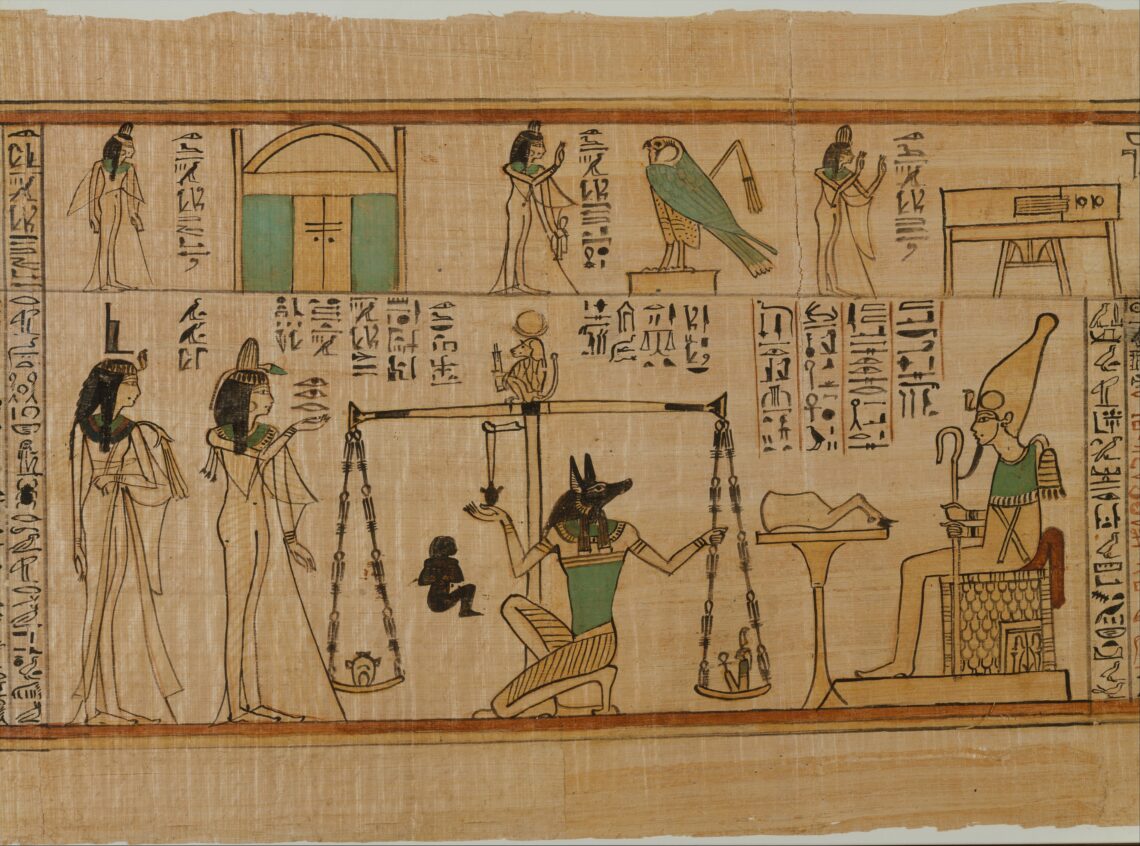
Art Sources:
Image Source: The Met Collection.
Title: Book of the Dead for the Chantress of Amun, Nauny
Period: Third Intermediate Period
Dynasty: Dynasty 21
Date: ca. 1050 B.C.
Geography: From Egypt, Upper Egypt, Thebes, Deir el-Bahri, Tomb of Meritamun (TT 358, MMA 65), burial of Nauny, first corridor, inside Osiris figure, MMA excavations, 1928–29
Medium: Papyrus, paint

You May Also Like

Are We in an AI Bubble? No, but Still be Wary.

Google’s Bard and ChatGPT Write a Blog Post